Bonsai care
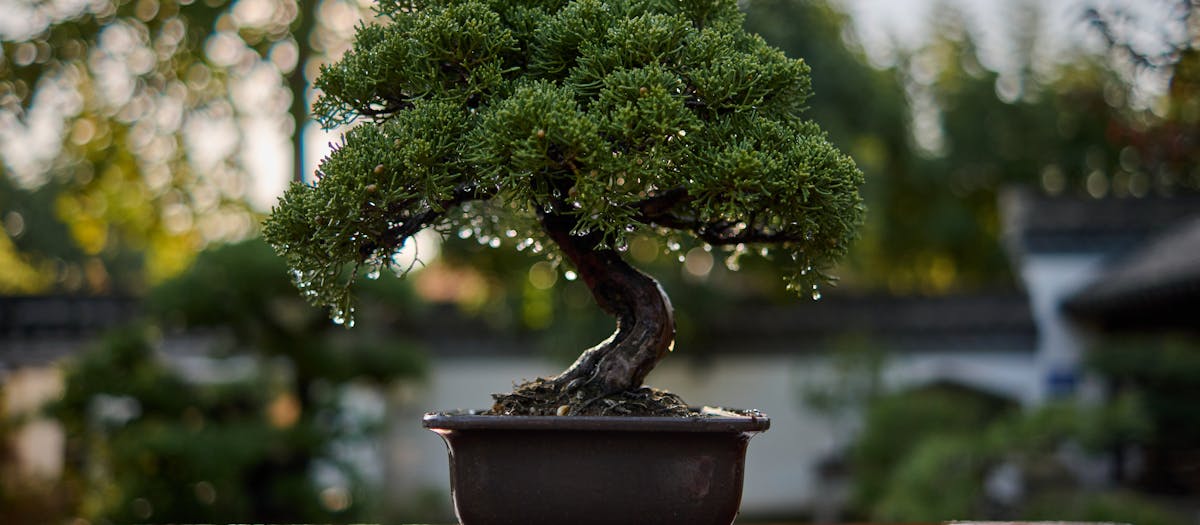
Keeping a bonsai alive comes down to a handful of habits: watering by feel, giving it enough light, feeding it through the growing season, and respecting the seasons. None of it is complicated, but the order matters and a fixed schedule will let you down. This silo covers the day-to-day care that keeps a beginner tree healthy, and how to read the early signs of a tree in trouble.
Watering by feel, not by schedule
Watering kills more beginner trees than any cause except keeping a temperate tree indoors — and usually because of a fixed schedule, not too much or too little water in itself. A schedule ignores the weather, the season and how thirsty the tree is on a given day.
The method: check the soil daily, and water when the surface is just starting to dry. Push a finger a centimetre in; if it is barely moist, water. Water thoroughly — pour gently with a fine rose until it runs from the drainage holes, pause, and do it again so the whole soil mass is wetted. In a fast-draining bonsai mix it is hard to over-water if the soil drains, which is one more reason the soil matters.
Light, and when you need a grow light
Outdoor temperate trees want full or near-full sun for most of the year. Indoor tropicals are the ones with a light problem: most homes, especially in winter, do not give a ficus or jade the light it needs, so it stretches, drops leaves and weakens. A bright south-facing window helps; a grow light on a timer for ten to fourteen hours a day fixes it. For an indoor grower in a northern climate, a grow light is the single most useful upgrade through the dark months.
Fertiliser through the growing season
A tree in a small pot exhausts the nutrients in its soil quickly, so it needs feeding during the growing season — broadly spring through early autumn for most species. Feed lightly and regularly rather than heavily and rarely, and taper off as growth slows in autumn. Do not push a stressed or freshly repotted tree with fertiliser; let it recover first. Dedicated fertiliser buyer guides land in a later batch.
The seasonal calendar
- Spring — growth begins. Water more as it warms, start a light feeding routine, and let the tree grow before any heavy work.
- Summer — peak growth and watering. Outdoor trees may need daily water; check indoor trees for enough light.
- Autumn — growth slows, feeding tapers. Temperate trees harden for dormancy — leave them outdoors; they need the cold.
- Winter — temperate trees rest outdoors with the pot protected from hard freezes. Indoor tropicals get a grow light and less water as growth slows.
Reading a tree in trouble
Most trouble shows up as yellow leaves, leaf drop, or sudden wilting, and the usual causes are the basics: too much water in a slow-draining soil, too little light indoors, or the shock of a recent repot or move. Work through those before assuming the worst. A tree losing a few inner leaves while pushing new growth is often just renewing itself; a tree dropping leaves all over while sitting in wet soil is telling you something.
If you see signs of pests or disease — fine webbing, sticky residue, spots, or webby leaf drop — identify the problem before treating it. I do not give pesticide-application instructions here, because the right product and dose depend on the pest and your region. Your local cooperative extension office can identify the issue and recommend a safe, legal treatment for where you live.
Featured guides
The current published guides in this silo. More land each batch.
Landing next: best liquid bonsai fertiliser, a bonsai watering can guide, and a humidity-tray guide for indoor trees.
Care for your situation
If your tree lives indoors
Light is your biggest variable. Give it the brightest spot you have, add a grow light for winter, and let the soil dry slightly between waterings since indoor air dries pots more slowly.
If your tree lives outdoors
Sun and water are abundant in summer, so the work is keeping up with daily watering and protecting the pot in winter freezes. Feed through the growing season and let the tree rest in winter.
If your tree looks unhappy
Check the basics first — water, light, recent disturbance — before anything else. If you suspect pests, get an identification from your extension office rather than spraying blind.