Best bonsai grow light
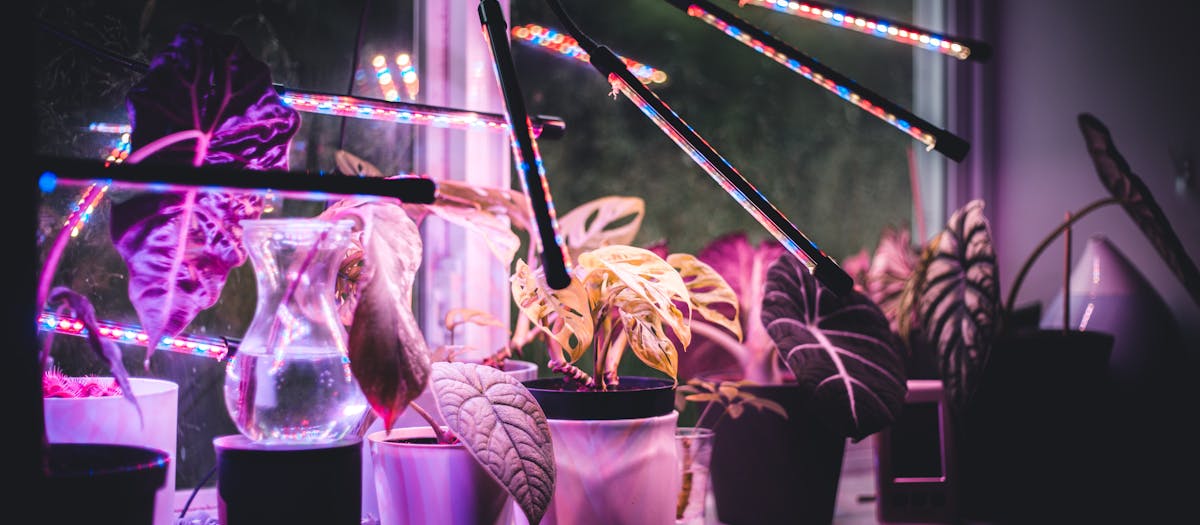
Indoor tropical bonsai need more light than most homes provide, and a tree on a dim windowsill slowly weakens — especially through winter, when the days are short and the sun sits low. A grow light run on a timer fixes that, and for an indoor grower in a northern climate it is the single most useful upgrade. This guide explains the specs that decide whether a light actually helps, then points you to the picks once they are verified.
How to read this. A grow light is judged on a handful of measurable specs, so read the framework first — it lets you size any light to your tree — then look at the picks.
How to choose a grow light
Five things decide whether a grow light suits your tree. They are exactly the columns in the comparison below.
Spectrum — full-spectrum white
A full-spectrum white LED is the easiest and most pleasant choice for a tree kept in a living space. It provides the range of light a tree uses to grow without the purple-pink glare of older blue-and-red panels. Unless you are running a dedicated grow tent out of sight, full-spectrum white is the spec to want.
Intensity — enough to matter
A grow light has to be bright enough to actually drive growth, not just glow. Intensity is reported in different ways across listings, so use the manufacturer's recommended hanging distance as your guide and watch the tree: a tree that stretches toward the light needs more, and scorched tips mean too much, too close.
Coverage — match it to the tree or shelf
Coverage is the footprint the light effectively illuminates. For one tree, a small clip-on or compact panel covering the canopy is plenty; for a few trees on a shelf, you want a panel that covers the whole area evenly. Buying more coverage than you need wastes money and electricity.
Form factor — clip-on, panel or bulb
Clip-on lights suit a single tree on a sill or desk; flat panels suit a shelf of several trees; screw-in bulbs fit an existing fixture. Pick the form that fits where the tree actually lives. A clip-on with a flexible neck is the most beginner-friendly for one tree.
Timer — built-in is worth it
A grow light should run a consistent ten-to-fourteen-hour day, and a built-in timer makes that effortless. If a light has no timer, an inexpensive plug-in timer does the same job. Consistency matters more than the exact hours, and a timer guarantees it.
The grow lights compared
A short list of widely available grow lights, compared on the five specs above. Specs are verified against manufacturer and current Amazon listings — no hands-on testing claims, just the numbers and the form factors that decide the fit.
| Best for | Spectrum | Intensity | Coverage | Form factor | Timer |
|---|---|---|---|---|---|
| Best overall | Full spectrum 400–780 nm (4000K daylight) | PPF 65.6 μmol/s; PPFD 265.58 μmol/m²/s @ 1 ft | ~1–2 sq ft optimal | E26 screw-in bulb | No built-in — use outlet timer |
| Best budget | Full spectrum 4000K white + red/blue | 11W per bulb, 1,000 LM | Standard single-bulb fixture | A19 E26 bulb, 2-pack | No built-in — use outlet timer |
| Best clip-on | Full spectrum 6000K; 10 red + 74 white LEDs | 5 dimmable brightness levels | ~1–2 sq ft | Clip-on with flexible gooseneck arm | Built-in 4 / 8 / 12 hr auto-cycle timer |
| Best panel for a shelf | Full spectrum 380–780 nm | 40W total, 316 LEDs across 4 panels | Full shelf or under-cabinet row (linkable layout) | 4 ultra-thin linkable panels with cable ties | Built-in 3 / 9 / 12 hr timer; 10 dimmable levels |
| Best for a single tree | Full spectrum 400–780 nm | 20W total; PPFD 402 μmol/m²/s @ 1 ft | 360° adjustable, 2 independent gooseneck heads | 2-head clamp gooseneck | No built-in — use outlet timer |
Our top picks
Best overall: SANSI Grow Lights for Indoor Plants — Full Spectrum 36W Grow Light Bulb (400W Equiv) with Optical Lens, High PPFD

Best overall
SANSI Grow Lights for Indoor Plants — Full Spectrum 36W Grow Light Bulb (400W Equiv) with Optical Lens, High PPFD
SANSI
- Spectrum: Full spectrum 400–780 nm (4000K daylight)
- Intensity: PPF 65.6 μmol/s; PPFD 265.58 μmol/m²/s @ 1 ft
- Coverage: ~1–2 sq ft optimal
- Form factor: E26 screw-in bulb
- Timer: No built-in — use outlet timer
- Best for: Any indoor bonsai; replaces existing desk or clamp lamp
Screw SANSI's 36W COC-chip bulb into any E26 desk lamp or clamp fixture and your indoor bonsai gets more usable photons than nearly any comparable bulb. The patented optical lens boosts PPFD and eliminates hot spots — 4000K output looks like natural light to the eye but delivers full red-blue spectrum to your tree. 25,000-hour rated lifespan.
Last checked 2026-05-21
Best budget: Briignite LED Grow Light Bulb A19, Full Spectrum 11W (100W Equiv), E26 Base — 2-Pack

Best budget
Briignite LED Grow Light Bulb A19, Full Spectrum 11W (100W Equiv), E26 Base — 2-Pack
Briignite
- Spectrum: Full spectrum 4000K white + red/blue
- Intensity: 11W per bulb, 1,000 LM
- Coverage: Standard single-bulb fixture
- Form factor: A19 E26 bulb, 2-pack
- Timer: No built-in — use outlet timer
- Best for: Budget beginners; upgrading any existing desk or floor lamp
Two full-spectrum bulbs for under $14 — the cheapest path to getting your indoor bonsai the light it needs. The 4000K output appears as natural white so it won't tint your living room, and 11W runs cool enough to keep inches from the canopy. A solid starter upgrade while you dial in your tree's actual light requirements.
Last checked 2026-05-21
Best clip-on: GooingTop LED Grow Light — 6000K Full Spectrum Clip-On Plant Lamp, 5-Level Dimmable, Auto On/Off 4/8/12Hr Timer

Best clip-on
GooingTop LED Grow Light — 6000K Full Spectrum Clip-On Plant Lamp, 5-Level Dimmable, Auto On/Off 4/8/12Hr Timer
GooingTop
- Spectrum: Full spectrum 6000K; 10 red + 74 white LEDs
- Intensity: 5 dimmable brightness levels
- Coverage: ~1–2 sq ft
- Form factor: Clip-on with flexible gooseneck arm
- Timer: Built-in 4 / 8 / 12 hr auto-cycle timer
- Best for: Single desk or shelf tree; no existing lamp needed
Clip it to a shelf edge, pot rim, or table and forget it — GooingTop's built-in 4/8/12-hour timer handles the schedule so you never have to remember. The flexible gooseneck lets you angle the 6000K head precisely where the canopy needs it. Best all-in-one clip-on value for a single indoor bonsai on a desk or windowsill.
Last checked 2026-05-21
Best panel for a shelf: Rocoking 40W Ultra-Thin Panel Grow Lights for Indoor Plants — 316 LEDs Full Spectrum, 4-Pack, 3/9/12Hr Timer

Best panel for a shelf
Rocoking 40W Ultra-Thin Panel Grow Lights for Indoor Plants — 316 LEDs Full Spectrum, 4-Pack, 3/9/12Hr Timer
Rocoking
- Spectrum: Full spectrum 380–780 nm
- Intensity: 40W total, 316 LEDs across 4 panels
- Coverage: Full shelf or under-cabinet row (linkable layout)
- Form factor: 4 ultra-thin linkable panels with cable ties
- Timer: Built-in 3 / 9 / 12 hr timer; 10 dimmable levels
- Best for: Multi-tree bonsai shelf or under-cabinet planting station
Four linkable ultra-thin panels mount under a shelf and flood an entire row of bonsai with 380–780 nm light. The 3/9/12-hour timer and 10 brightness levels let you dial in the exact DLI each species needs. For anyone setting up a dedicated bonsai shelf or light table, this four-pack delivers the best coverage-per-dollar of any pick here.
Last checked 2026-05-21
Best for a single tree: SANSI LED Grow Lights — 300W Full Spectrum Gooseneck Clamp Lamp, 20W, 2-Head, High PPFD

Best for a single tree
SANSI LED Grow Lights — 300W Full Spectrum Gooseneck Clamp Lamp, 20W, 2-Head, High PPFD
SANSI
- Spectrum: Full spectrum 400–780 nm
- Intensity: 20W total; PPFD 402 μmol/m²/s @ 1 ft
- Coverage: 360° adjustable, 2 independent gooseneck heads
- Form factor: 2-head clamp gooseneck
- Timer: No built-in — use outlet timer
- Best for: Dedicated single tree; highest PPFD of all picks
SANSI's dual-head gooseneck clamps to a desk or shelf and delivers 402 μmol/m²/s PPFD — the highest raw intensity of any pick in this guide. Two independently angled heads wrap the canopy in light from multiple directions, mimicking the diffuse skylight that tropical bonsai are used to. SANSI's lifetime free bulb replacement makes this a long-term investment.
Last checked 2026-05-21
Who should buy what
One tree on a windowsill
A clip-on full-spectrum light with a timer is all you need. It targets the canopy, takes no shelf space, and switches itself on and off so the schedule stays consistent.
A small indoor collection
Once you have several trees, a flat panel over a shelf lights them evenly and is more efficient than several clip-ons. Match the panel's coverage to the shelf footprint.
Outdoor growers
You almost certainly do not need one. Outdoor temperate trees want full sun and a real winter, and a grow light does not change that. Spend the money on soil or tools instead.
Light is half the job — soil is the other half
A grow light keeps an indoor tropical growing, but light alone will not save a tree whose roots are rotting in the wrong soil. The two go together: free-draining bonsai soil keeps the roots healthy, and the light keeps the canopy growing. If you are setting up an indoor tree, get both right. Choosing the tree itself is covered in the species hub, and the care hub covers watering and feeding indoors.
Frequently asked questions
Does an indoor bonsai really need a grow light?
Often, yes — especially in winter. Tropical bonsai like ficus and jade need more light than most homes provide, and a tree on a dim windowsill stretches, drops leaves and weakens. A genuinely bright south-facing window can be enough; where it is not, a grow light run on a timer keeps the tree healthy through the dark months.
What spectrum of grow light is best for bonsai?
A full-spectrum white LED is the easiest choice and looks natural in a home. Full-spectrum lights provide the range of light a tree uses to grow, without the purple-pink cast of older blue-and-red panels. For a bonsai kept in a living space, a full-spectrum light is both effective and pleasant to live with.
How long should I run a bonsai grow light each day?
Roughly ten to fourteen hours a day, ideally on a timer so it is consistent. That mimics a long growing-season day and carries an indoor tropical through winter. Leaving it on around the clock does not help — trees need a daily dark period too. A timer removes the guesswork and keeps the schedule steady.
How close should the grow light be to the tree?
It depends on the light intensity, and the manufacturer listing usually gives a recommended distance. Too far and the tree gets too little light; too close and strong panels can scorch foliage. Start at the listed distance, then watch the tree — stretching means move it closer, scorched tips mean move it back.
Will a grow light help an outdoor bonsai?
No — outdoor temperate trees want full sun and a real winter, and a grow light does not change that. The light problem is an indoor problem, for tropical species kept inside. An outdoor juniper or maple needs the sun and the seasons, not artificial light, so a grow light is strictly an indoor-grower tool.
What size grow light do I need for one bonsai?
For a single tree, a small clip-on or a compact panel that covers the tree's footprint is plenty. Match the coverage area to your tree, or to the shelf if you are lighting several. A larger panel makes sense only if you are growing a small indoor collection rather than one tree on a windowsill.